APEX MASS TIMBER HANGER

APEX

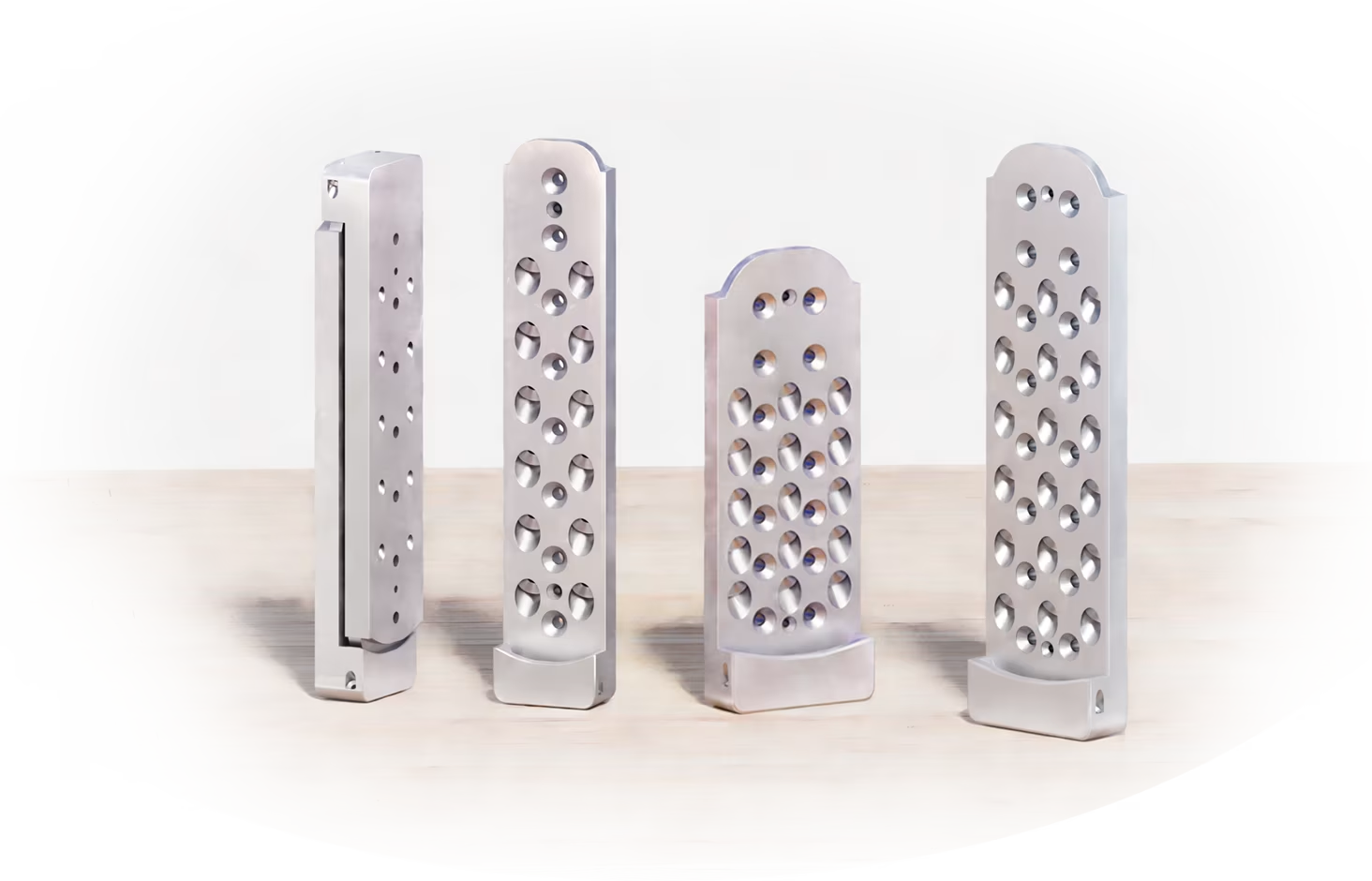
Pre-engineered Connection System
APEX
  • Canadian and US Engineered

  • Canadian and US Manufactured

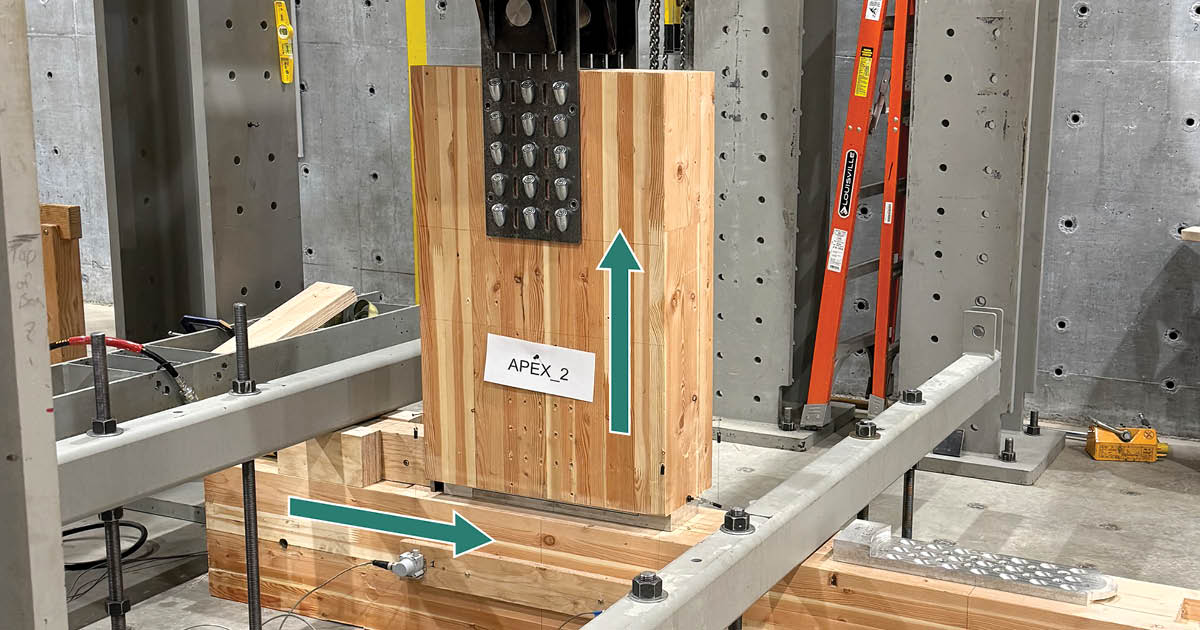
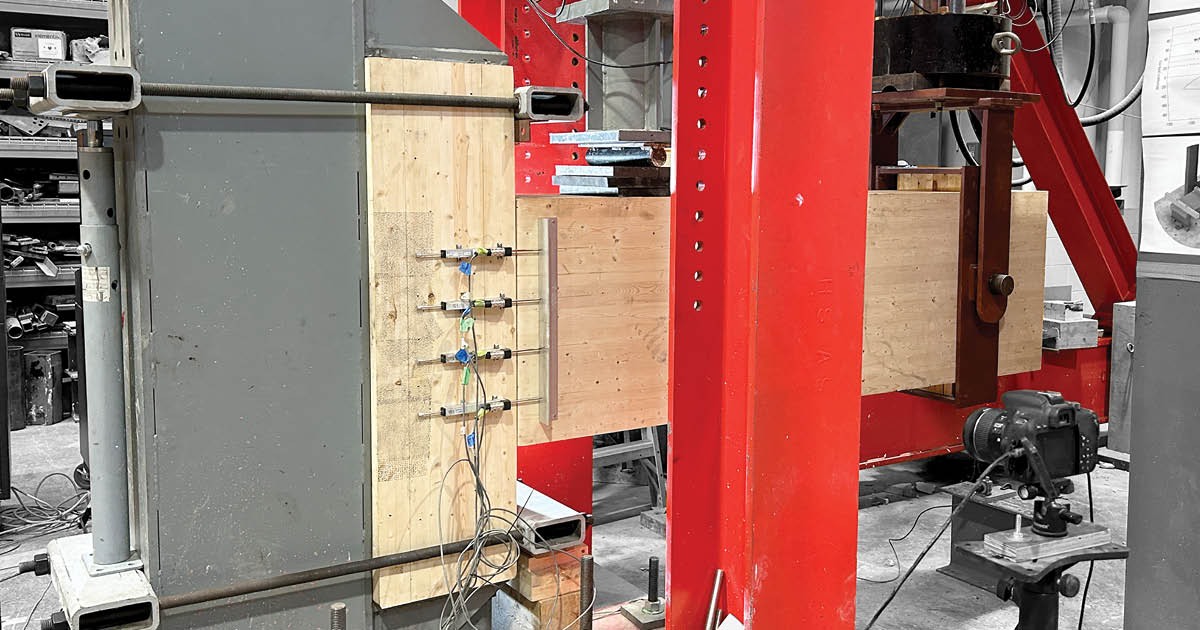
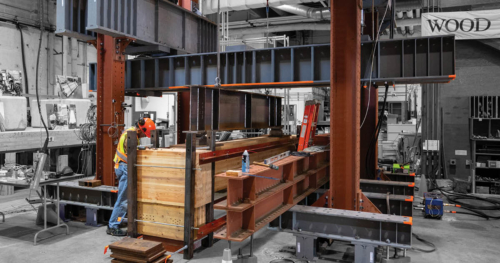
  • Interstory Drift Tested

  • MTC Solutions Owned

  • Download and axially tested

  • Installation Tolerances up to 1/8" (3.2mm) and 0.5°
Beam Hanger Comparison

  • APEX

  • MEGANT

  • RICON S VS

Download Capacity Range 159 - 227 kN 64 - 115 kN 22 - 129 kN
Uplift Capacity Range Design with Toe Screws 11 - 29 kN 7 - 13 kN
with Clip Lock
Axial Capacity Range 13 - 32 kN 17 - 53 kN 14 - 29 kN
Manufactured in US & Canada Austria Austria
Material Aluminum Aluminum Mild Steel
Connection Type Wood-to-Wood Wood-to-Wood Wood-to-Wood
Wood-to-Steel
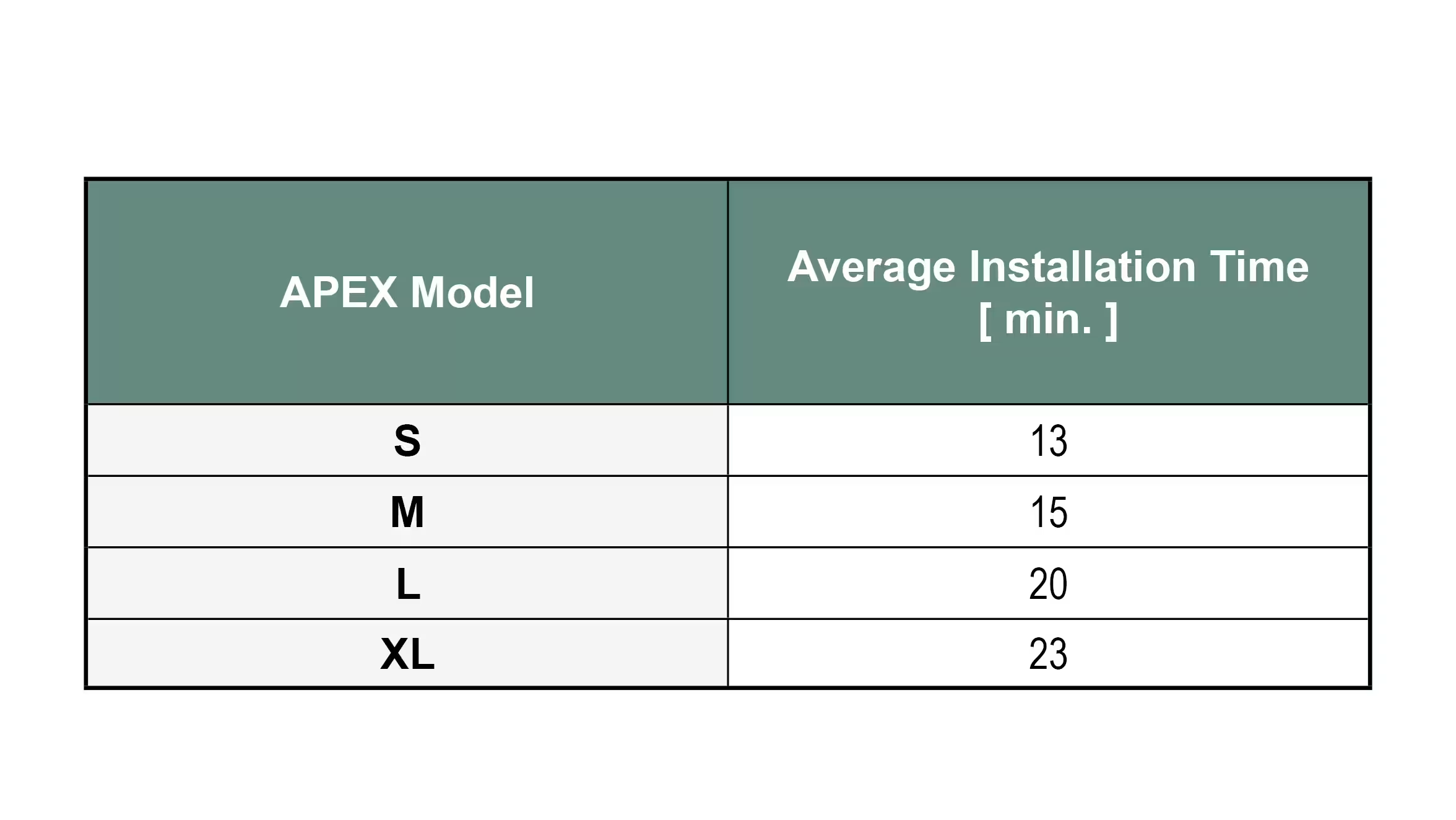
Installation Time 13 to 20 mins 21 to 37 mins 9 to 20 mins
Installation Tolerances Axial 3.2mm (1.8") - 1mm (0.039")
RICON S VS XL
Horizontal 3.2mm (1.8") - 1mm (0.039")
RICON S VS XL
Rotational 0.5° - -
Standard & Certifications CSA O86:24 CSA O86:24
ETA-15/0667 2019
CSA O86:24
ICC-ESR-4300
ETA-10/0189 2019
Seismic Compatibility > 4% interstory drift > 4% interstory drift > 4% interstory drift
Tested Fire Resistance Rating Coming Soon - 1 Hour

Notes:

  1. This table is intended as a pre-selection tool only. Refer to each respective connector for full design guidelines.
  2. The EOR is responsible for verifying all aspects of the connection design.
Wood-to-Wood Design Values

Wood-to-Wood Design Values

MTC Tech Support DL Design Guide

Pre-engineered download and axial capacities of the APEX beam hangers in wood-to-wood configurations (derived in accordance with CSA O86:24, ASTM D7147-21*, and ICC-ESR*) along with minimum beam and column sections for 45- to 120-minute fire-resistance ratings (FRR).


Minimum Secondary Beam Section Dimensions [ mm ]
APEX
Model
Configuration No FRR 45-min FRR 1-hr FRR 2-hr FRR Relative
Density
[ G ]
Factored Resistance
[ kN ]
Download Axial
APEX
S
Single 113 x 504 174 x 533 194 x 549 272 x 617 ≥ 0.42 159 13
≥ 0.44 168 14
≥ 0.46 171 15
≥ 0.49 171 17
Double 196 x 504 282 x 533 301 x 549 379 x 617 ≥ 0.42 270 23
≥ 0.44 286 24
≥ 0.46 291 26
≥ 0.49 291 30
APEX
M
Single 113 x 564 174 x 593 194 x 609 272 x 677 ≥ 0.42 190 13
≥ 0.44 201 14
≥ 0.46 211 16
≥ 0.49 211 18
Double 196 x 564 282 x 593 301 x 609 379 x 677 ≥ 0.42 323 23
≥ 0.44 342 24
≥ 0.46 358 26
≥ 0.49 358 30
APEX
L
Single 166 x 444 225 x 479 244 x 495 322 x 563 ≥ 0.42 210 24
≥ 0.44 222 25
≥ 0.46 227 28
≥ 0.49 227 32
Double 302 x 444 383 x 479 403 x 495 481 x 563 ≥ 0.42 357 41
≥ 0.44 377 43
≥ 0.46 386 47
≥ 0.49 386 54
APEX
XL
Coming soon

Notes:

  1. Connection design must meet all relevant requirements of the General Notes to Designer and General Notes to Installer sections, as well as all minimum geometry requirements. Download a copy of the Beam Hanger Design Guide
  2. Tabulated factored resistances are applicable for wood-to-wood connections only. Screw installation must follow the patterns presented in the Installation section.
  3. Minimum dimensions for secondary beams with no FRR are based on minimum end and edge distances.
  4. The listed connector resistances may be limited by the splitting resistance perpendicular to grain and the effective shear resistance of the timber members. Refer to Beam Hanger Design Guide Appendix C: Survey of Literature on Reinforcement for Tension Perpendicular to Grain (Page 116) for more information and available reinforcement strategies. It is the responsibility of the EOR to ensure the primary and secondary members have adequate capacity to resist connection forces.
  5. Alternative minimum beam sizes for members with an ASTM E1966 compliant fire-resistant joint can be found in Beam Hanger Design Guide Appendix A: Fire Protection (Page 116).
  6. APEX hangers require glued bond between plies; gaps and voids are not permitted. Split-laminated members shall be edge-glued or block-laminated and fabricated with pressure from all sides to ensure full contact between plies and no voids.
  7. Factored resistances provided do not account for combined loading in multiple directions. Combined gravity and axial loading must be verified per Beam Hanger Design Guide (eq. 1) (Page 13).

Secondary Member Requirements

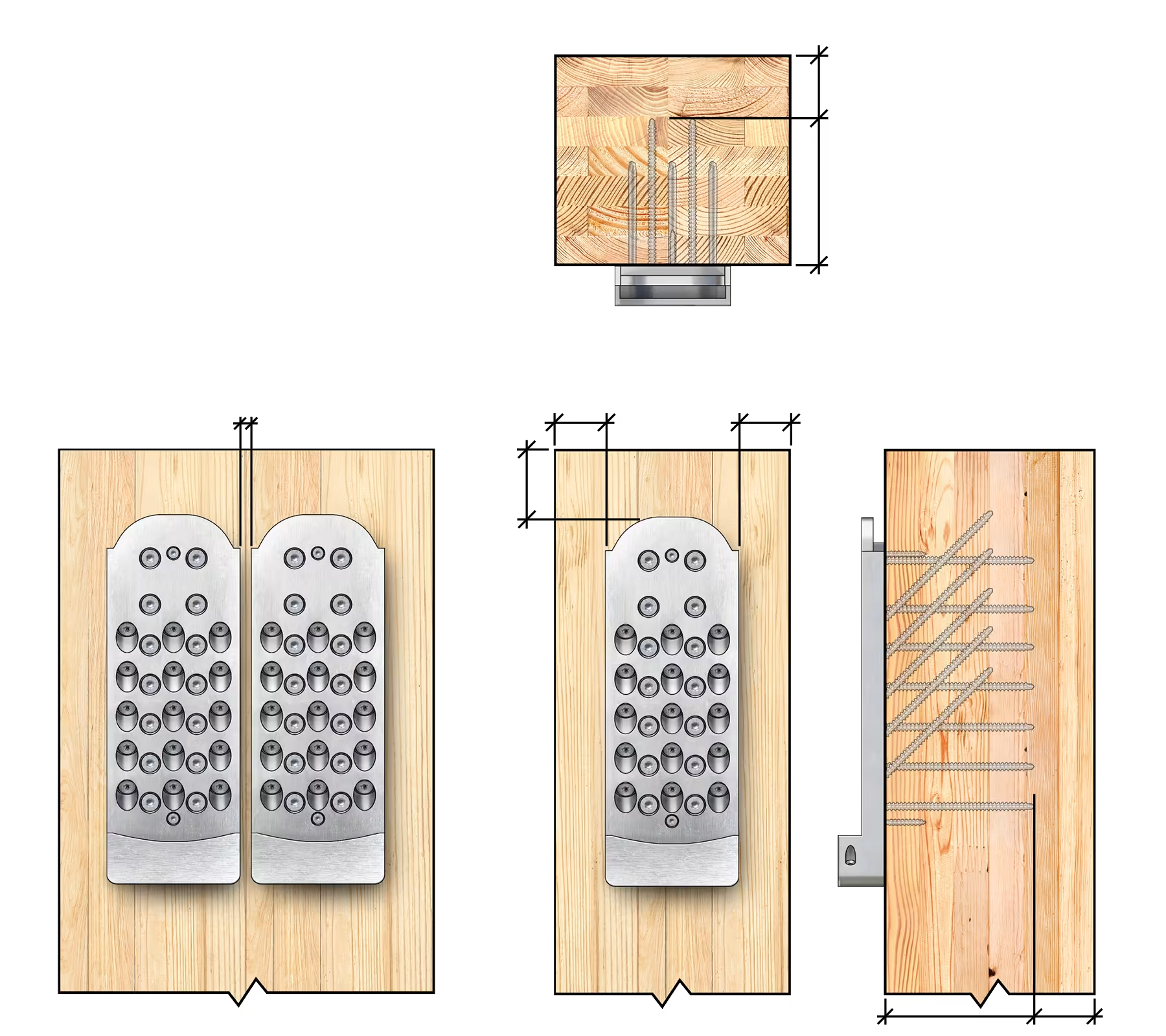
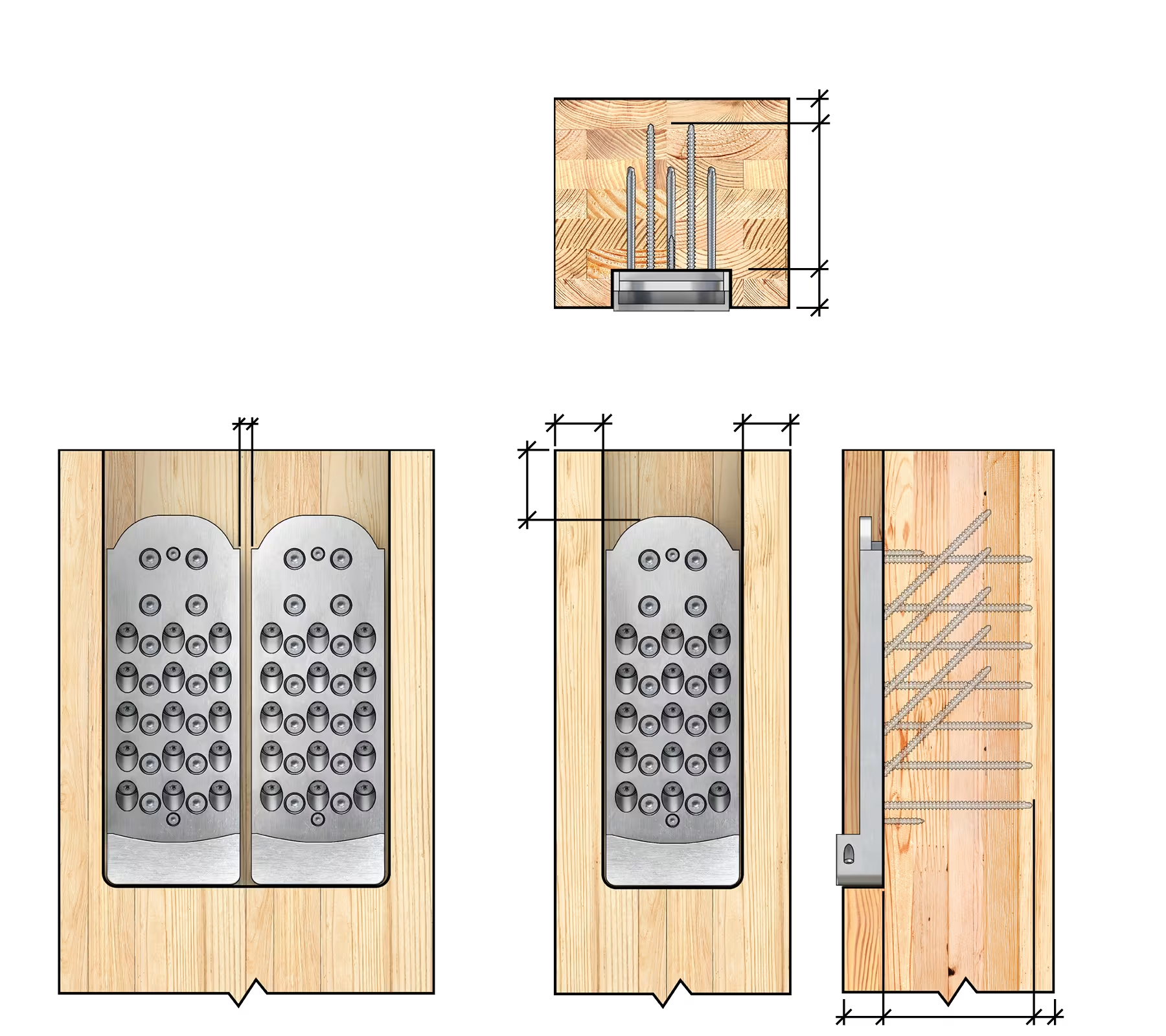
Secondary Member Geometry Requirements

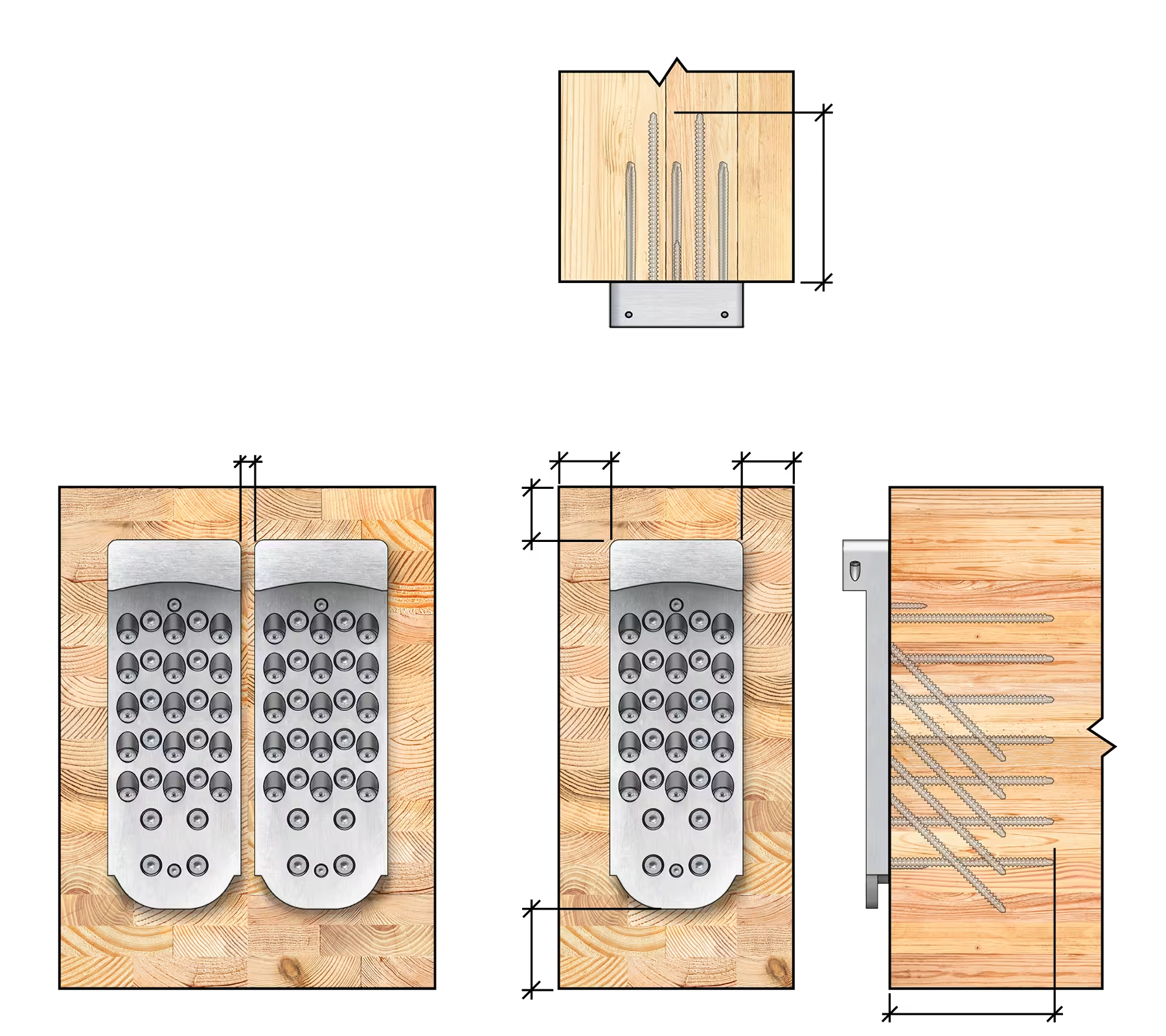
Unhoused

  • Ip
  • Sd
  • eside
  • eside
  • etop
  • ebot
  • Ip


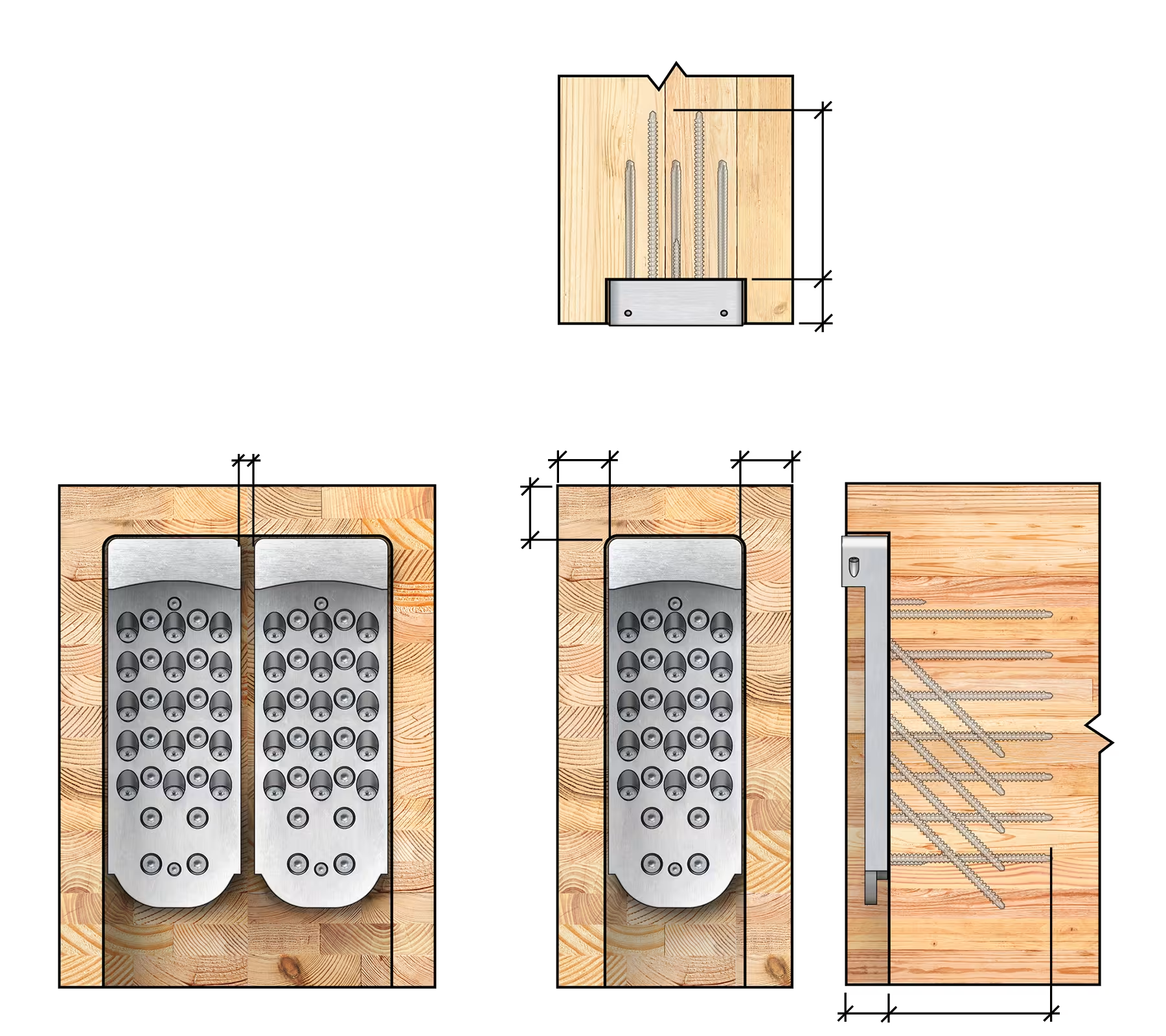
Housed

  • Ip
  • dh
  • Sd
  • eside
  • eside
  • etop
  • ebot
  • Ip


Geometry Requirements [ mm ]
Model Configuration lp etop No FRR 45-min FRR 1-hr FRR 2-hr FRR dh sd
eside ebot eside ebot eside ebot eside ebot
APEX
S
Single 176 7 6 33 36 62 46 78 85 146 48 N/A
Double 176 7 6 33 36 62 46 78 85 146 49 6
APEX
M
Single 176 7 6 33 36 62 46 78 85 146 49 N/A
Double 176 7 6 33 36 62 46 78 85 146 49 6
APEX
L
Single 176 1 7 21 36 56 46 72 85 140 49 N/A
Double 176 1 7 21 36 56 46 72 85 140 49 6
APEX
XL
Coming soon

Notes:

  1. Connection design must meet all relevant requirements of the General Notes to Designer and General Notes to Installer sections, as well as all minimum geometry requirements. Download a copy of the Beam Hanger Design Guide
  2. Screw installation must follow the patterns presented in the Installation section of the Beam Hanger Design Guide.
  3. Tabulated values presented are the minimum required unless noted otherwise. Tabulated values for lp are to the deepest screw penetration and are fixed. Tabulated values for dh are maximum values based on a gap between primary and secondary member of 1.6 mm [ 1/16 in. ]. Larger gaps will reduce dh accordingly.
  4. Tabulated values that are not dependent on FRR, as well as those for secondary beams with no FRR, are based on minimum end and edge distances.
  5. Dimensions for FRR’s other than those shown above may be linearly interpolated up to a maximum 2-hr FRR.
  6. Placement of a connector within the depth of the beam must be verified by the EOR for splitting perpendicular to grain resistance as well as the effective shear resistance of the members.

Primary Column Requirement

Primary Member Geometry Requirements - Beam/Girder

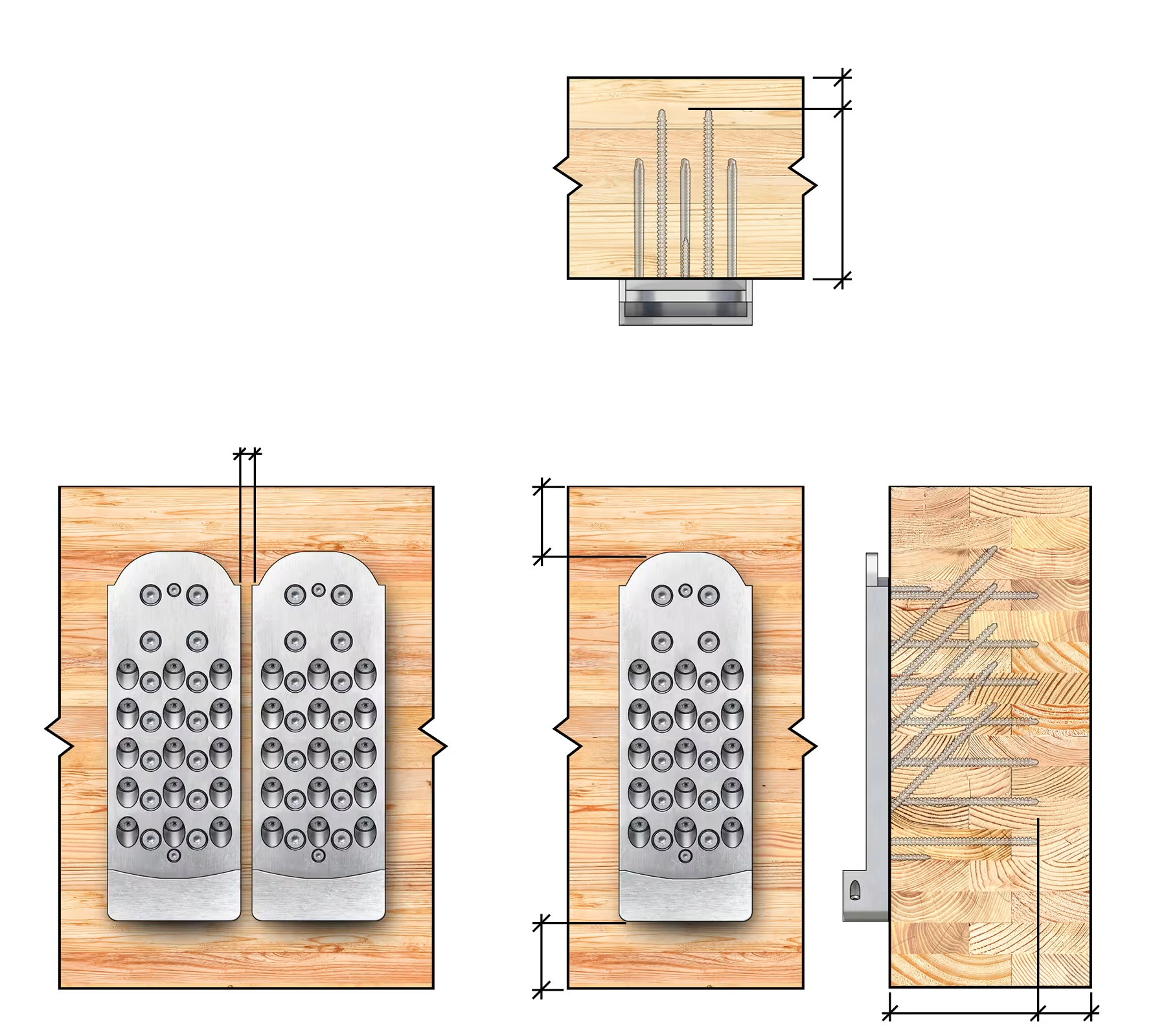
Unhoused

  • eback
  • Ip
  • Sd
  • etop
  • ebot
  • Ip
  • eback

Primary Member Geometry Requirements - Beam/Girder

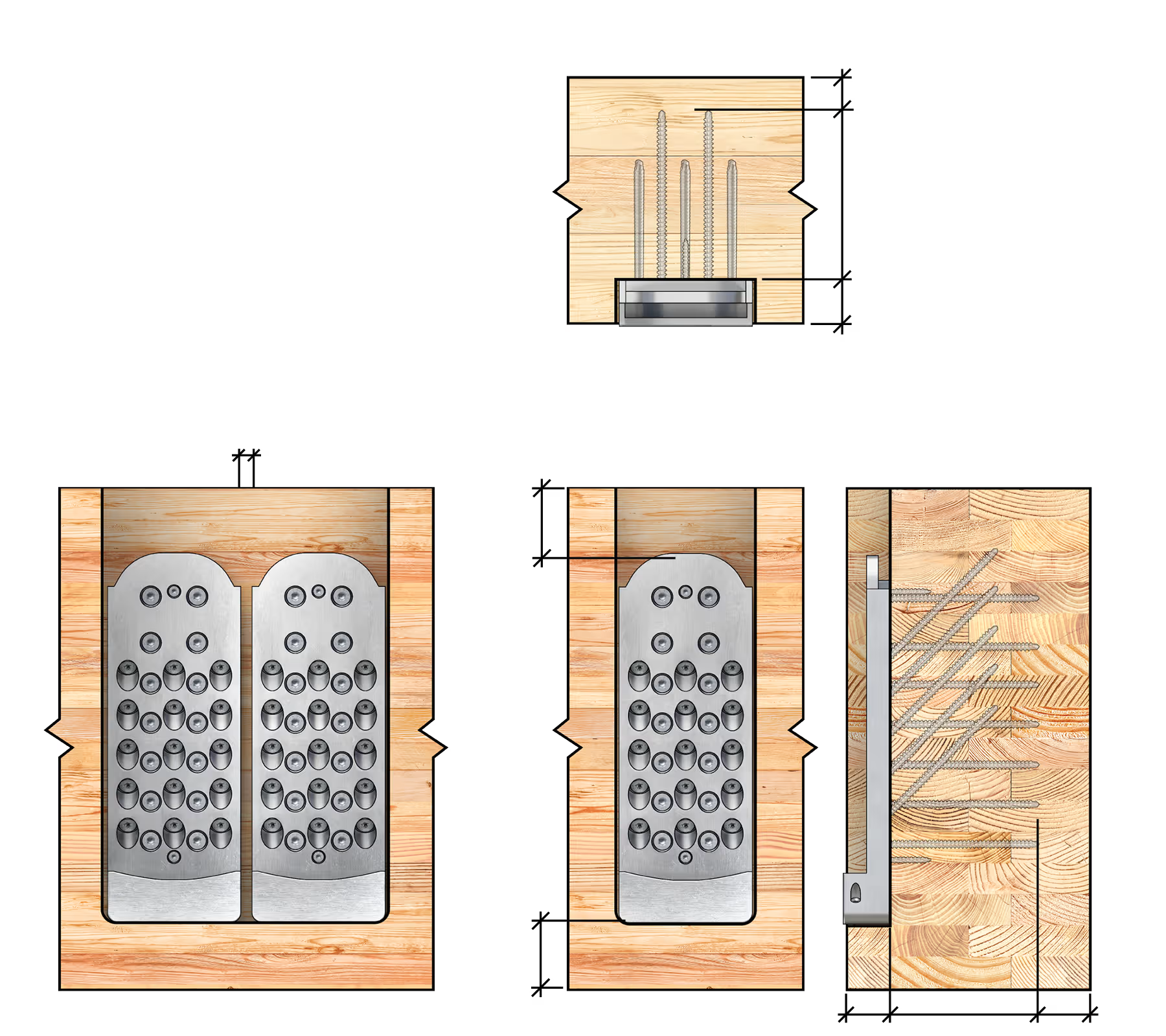
Housed

  • eback
  • Ip
  • dh
  • Sd
  • etop
  • ebot
  • dh
  • Ip
  • eback

Primary Member Geometry Requirements - Beam/Girder

Geometry Requirements [ mm ]
Model Configuration lp etop No FRR 45-min FRR 1-hr FRR 2-hr FRR dh sd
ebot eback ebot eback ebot eback ebot eback
APEX
S
Single 176 33 7 10 36 36 52 46 120 85 49 N/A
Double 176 33 7 10 36 36 52 46 120 85 49 6
APEX
M
Single 176 33 7 10 36 36 52 46 120 85 49 N/A
Double 176 33 7 10 36 36 52 46 120 85 49 6
APEX
L
Single 176 21 1 10 36 36 52 46 120 85 49 N/A
Double 176 21 1 10 36 36 52 46 120 85 49 6
APEX
XL
Coming soon

Notes:

  1. Connection design must meet all relevant requirements of the General Notes to Designer and General Notes to Installer sections, as well as all minimum geometry requirements. Download a copy of the Beam Hanger Design Guide
  2. Screw installation must follow the patterns presented in the Installation section of the Beam Hanger Design Guide.
  3. Tabulated values presented are the minimum required unless noted otherwise. Tabulated values for lp are to the deepest screw penetration and are fixed. Tabulated values for dh are maximum values based on a gap between primary and secondary member of 1.6 mm [ 1/16 in. ]. Larger gaps will reduce dh accordingly.
  4. Tabulated values that are not dependent on FRR, as well as those for secondary beams with no FRR, are based on minimum end and edge distances.
  5. Dimensions for FRR’s other than those shown above may be linearly interpolated up to a maximum 2-hr FRR.
  6. Placement of a connector within the depth of the beam must be verified by the EOR for splitting perpendicular to grain resistance as well as the effective shear resistance of the members.

Primary Beam Requirement

Primary Member Geometry Requirements - Post

Unhoused

  • eback
  • Ip
  • Sd
  • eside
  • eside
  • etop
  • Ip
  • eback

Primary Member Geometry Requirements - Post

Housed

  • eback
  • Ip
  • dh
  • Sd
  • eside
  • eside
  • etop
  • dh
  • Ip
  • eback


Geometry Requirements [ mm ]
Model Configuration lp etop No FRR 45-min FRR 1-hr FRR 2-hr FRR dh sd
eside eback eside eback eside eback eside eback
APEX
S
Single 176 33 6 10 36 36 46 46 85 85 49 N/A
Double 176 33 6 10 36 36 46 46 85 85 49 6
APEX
M
Single 176 33 6 10 36 36 46 46 85 85 49 N/A
Double 176 33 6 10 36 36 46 46 85 85 49 6
APEX
L
Single 176 21 7 10 36 36 46 46 85 85 49 N/A
Double 176 21 7 10 36 36 46 46 85 85 49 6
APEX
XL
Coming soon

Notes:

  1. Connection design must meet all relevant requirements of the General Notes to Designer and General Notes to Installer sections, as well as all minimum geometry requirements. Download a copy of the Beam Hanger Design Guide
  2. Screw installation must follow the patterns presented in the Installation section of the Beam Hanger Design Guide.
  3. Tabulated values presented are the minimum required unless noted otherwise. Tabulated values for lp are to the deepest screw penetration and are fixed. Tabulated values for dh are maximum values based on a gap between primary and secondary member of 1.6 mm [ 1/16 in. ]. Larger gaps will reduce dh accordingly.
  4. Tabulated values that are not dependent on FRR, as well as those for secondary beams with no FRR, are based on minimum end and edge distances.
  5. Dimensions for FRR’s other than those shown above may be linearly interpolated up to a maximum 2-hr FRR.
  6. Placement of a connector within the depth of the beam must be verified by the EOR for splitting perpendicular to grain resistance as well as the effective shear resistance of the members.

2D & 3D Geometry

2D & 3D Geometry

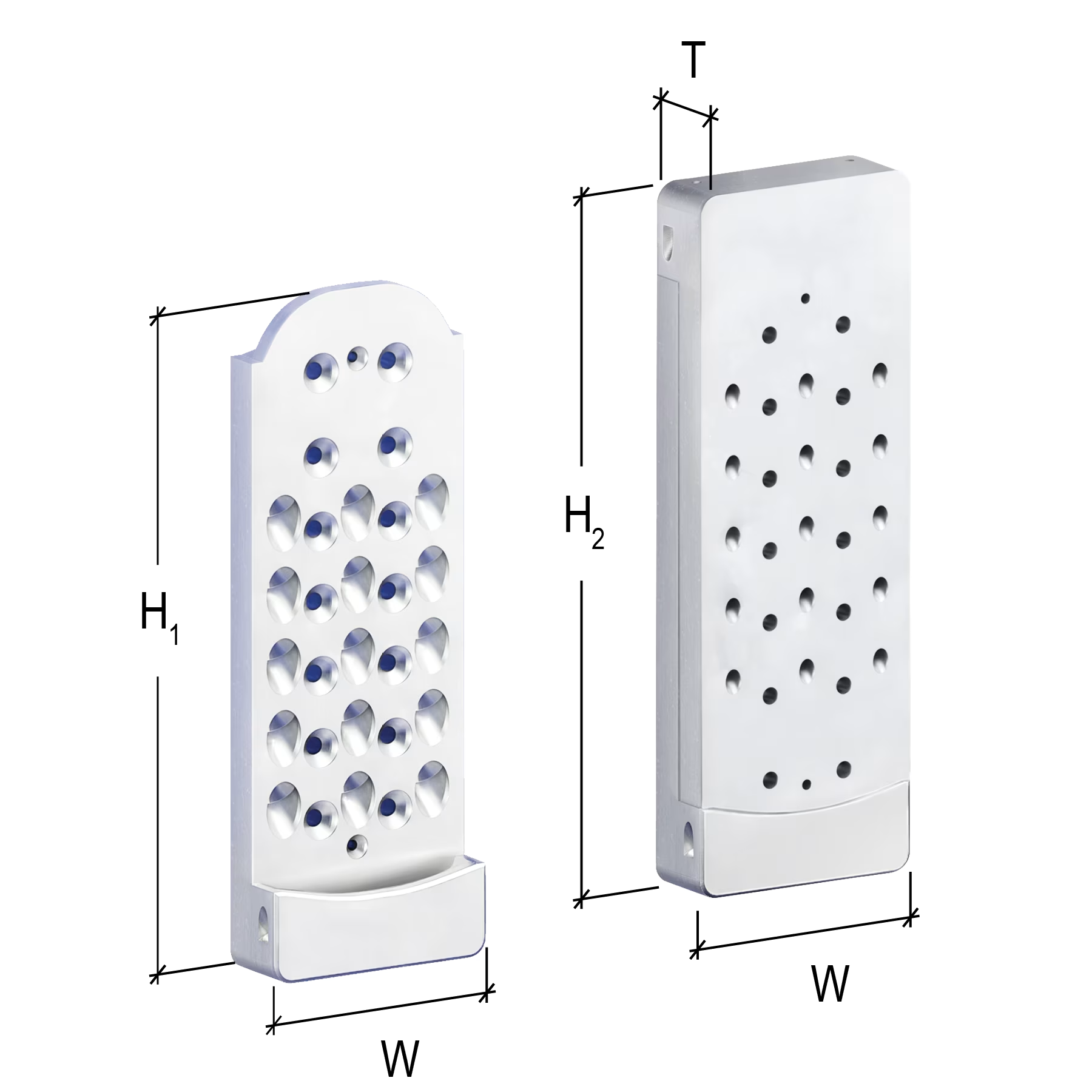
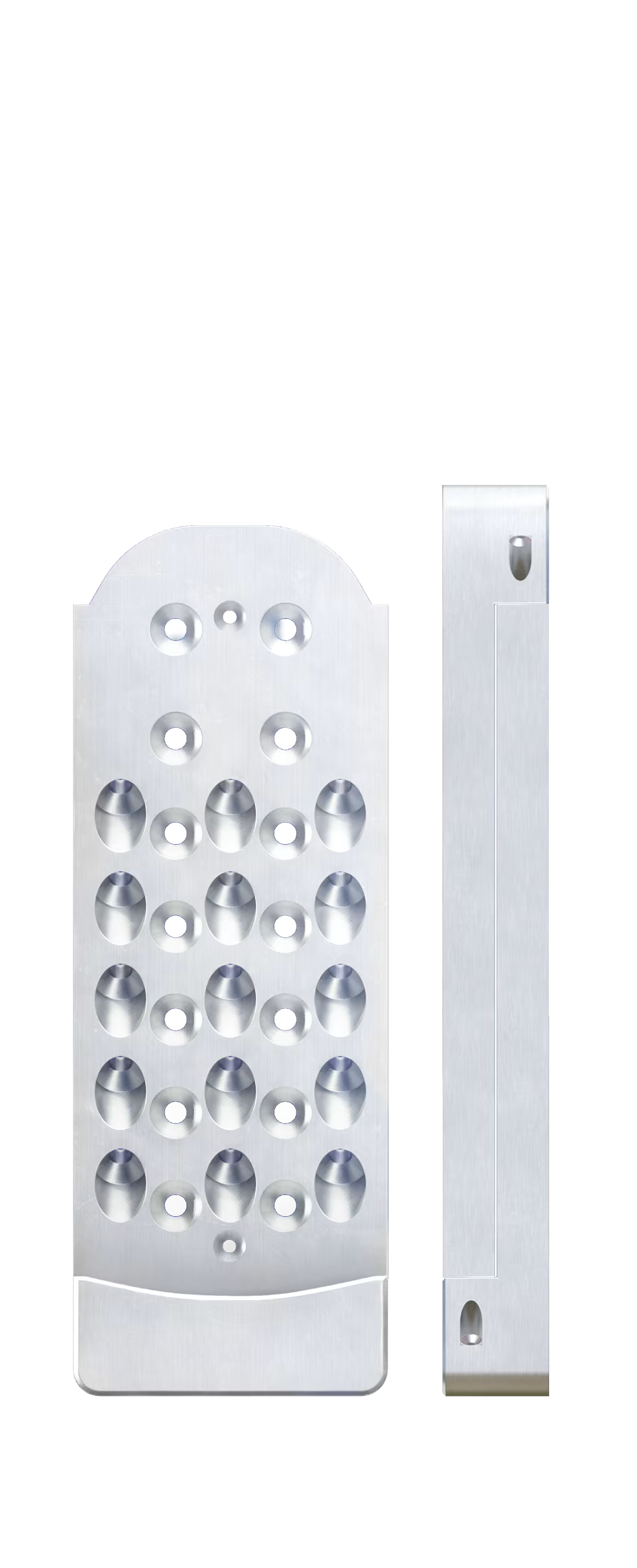
APEX beam hanger’s connector geometry (height, width, thickness) and downloadable 2D and 3D geometry files (.DXF, .DWG, .IFC, .STEP) for use in drawings and BIM models.

Connector
Geometry
Model
APEX
S
APEX
M
APEX
L
APEX
XL
[ mm ]
H1 463.5 523.5 422.3 Coming
soon
H2 489.5 549.5 549.5
W 101.6 101.6 152.4
T 50.8 50.8 50.8

Model .DXF .DWG .IFC .STEP

Notes:

  1. Connection design must meet all relevant requirements of the General Notes to Designer and General Notes to Installer sections, as well as all minimum geometry requirements. Download a copy of the Beam Hanger Design Guide
  2. Minor manufacturing tolerances may apply; actual product dimensions may vary slightly.
Design Guide

Design Guides

Beam Hanger Design Guide

The Beam Hangers Design Guide is a comprehensive resource for designing post and beam mass timber structures. It provides off-the-shelf, pre-engineered solutions such as the APEX or the RICON S VS, featuring tabulated design values and complete installation instructions to support project completion.

Installation Steps

Get it right the first time with fast, field-ready instructions for clean, concealed connections. Review each step below or download the APEX installation guide—simplified for quick reference in a black-and-white format, ideal for clipboards and printouts.

Download Coming Soon
MTC Tech Support

Tools - Use the Correct Bit

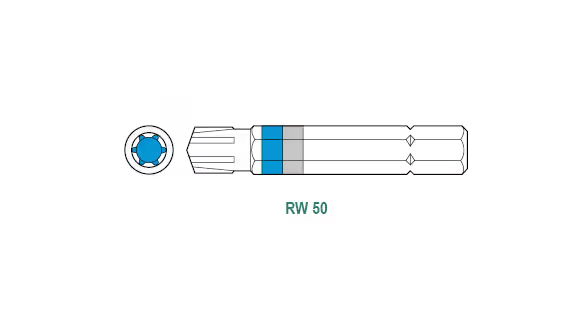
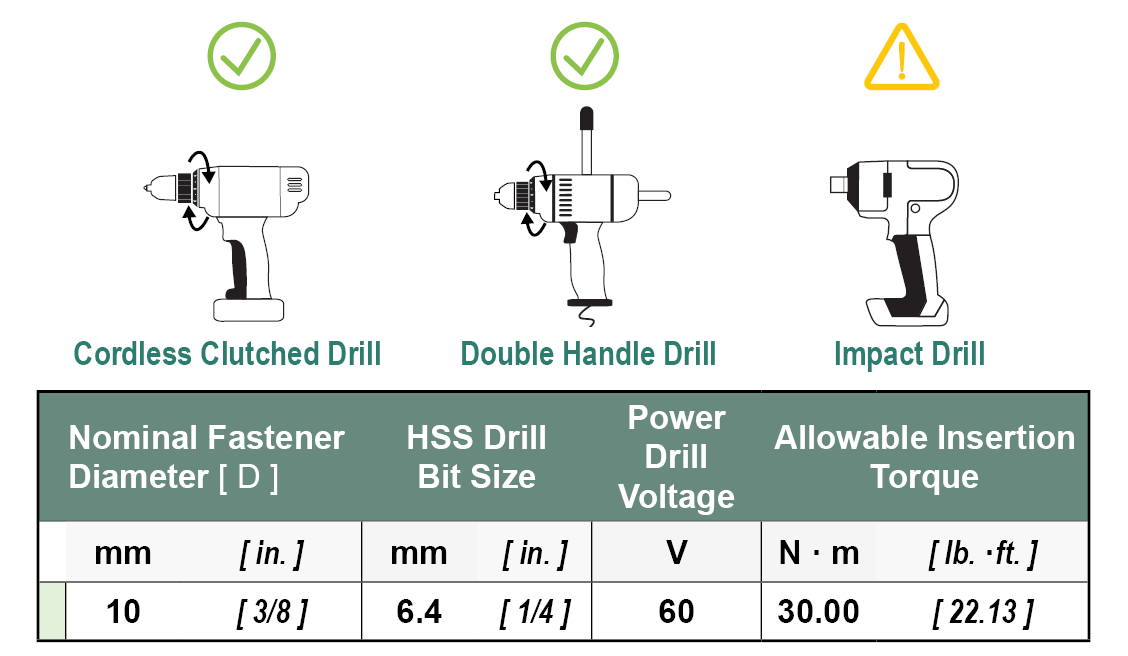
MTC Solutions fasteners should only be driven using RW bits, or appropriately sized star bits. This ensures good centering and positioning with optimal torque transmission. For the APEX, use an RW 50 bit for the 10 mm [ 3/8 in. ] screws.

Tools - Use the Correct Drill

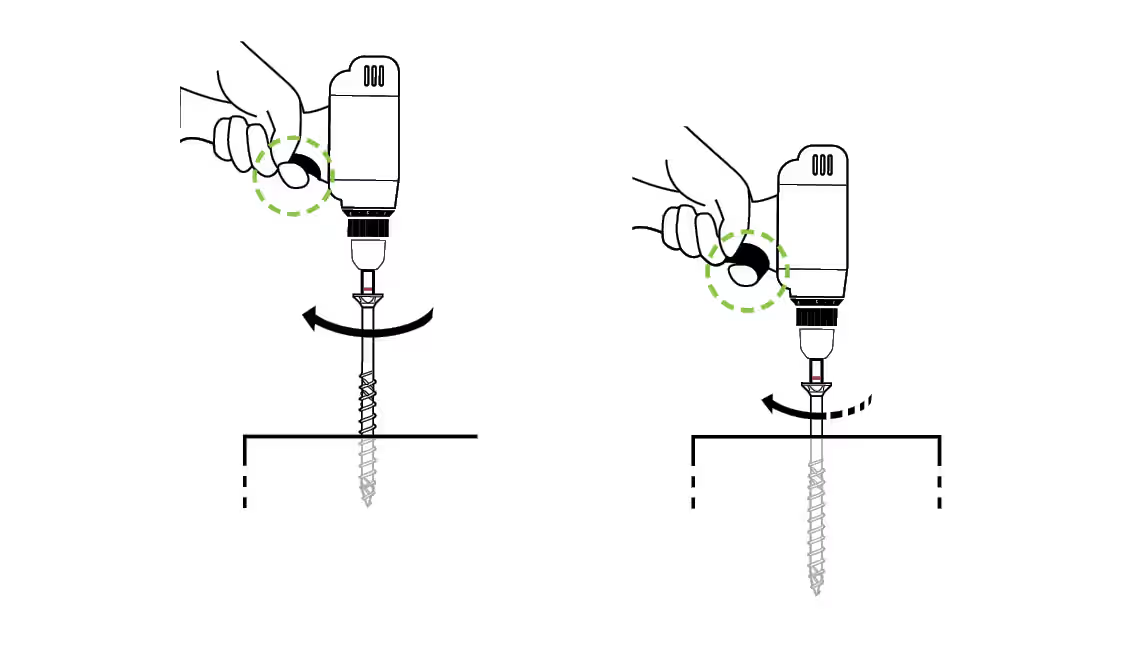
Use low-RPM, high-torque drills equipped with a feather (variable speed) trigger to install fasteners. Avoid excessive acceleration and deceleration during the drive-in process. Do not overtorque fasteners. Although impact guns are not expressly prohibited, their use is discouraged – particularly for beam hanger systems – due to an increased risk of overtorquing. Use the appropriate drill chuck size according to the fastener.

Estimated Installation Time

This process includes the following steps:
1. Layout (~10%)
2. Positioning (~10%–15%)
3. Pilot Holes (~20%–25%)
4. Screw Installation (~50%–60%)
5. Optional Measures (not included in the time installation % breakdown)

Installation time can be reduced with efficient fabrication and site practices such as:
1.Drilling pilot holes for the nonstructural positioning screws at the time of fabrication
2.Utilizing templates to drill pilot holes for structural screws
3.Optimizing beam positioning to reduce worker fatigue

Layout - Reference Points

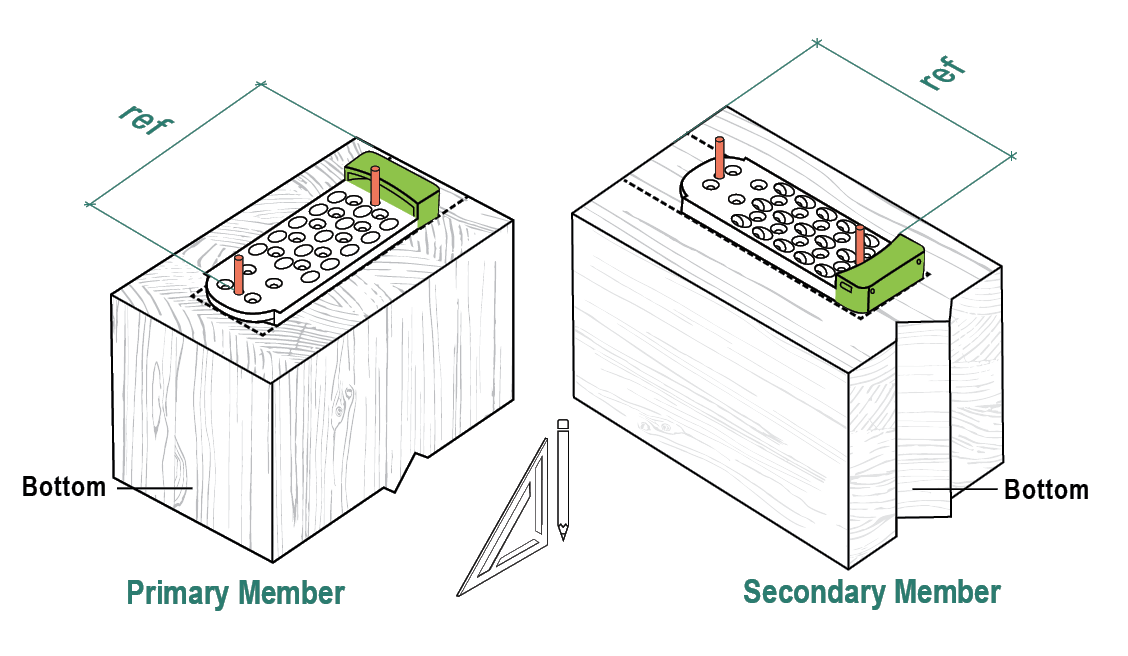
Begin by laying out the installation locations in the primary and secondary members using a pencil and square.

The connector’s point of reference is the top of the beam. The lower nonstructural positioning screw should be measured from that point of reference.

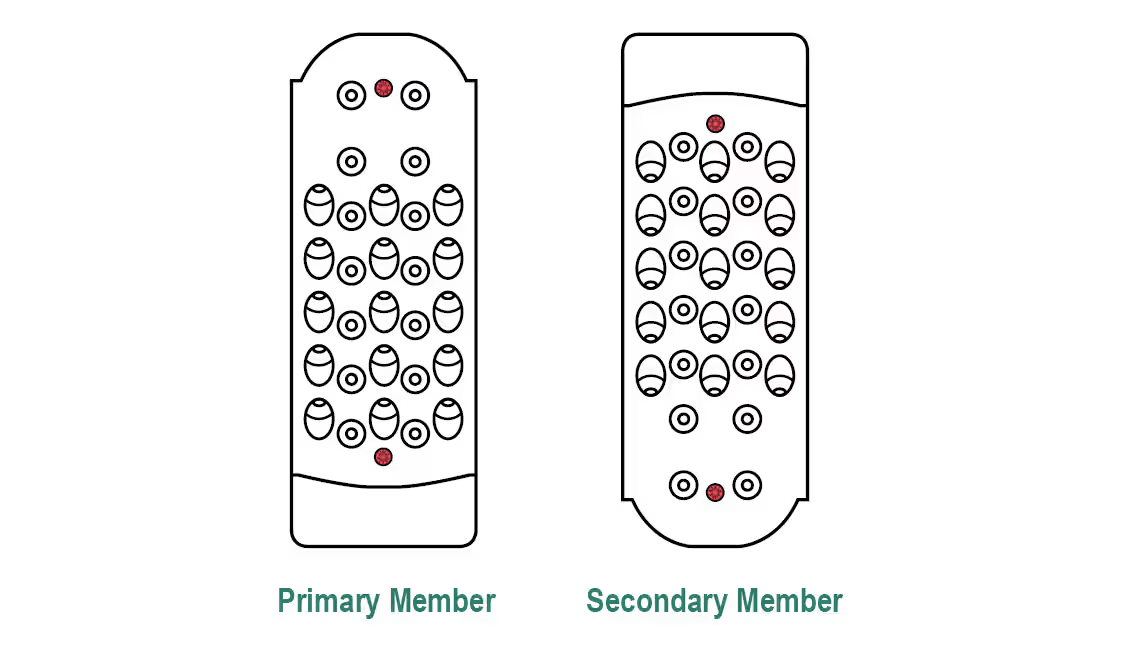
The pocket should be at the bottom on the primary member and on the top on the secondary member.

Layout - Split Lamination Considerations

It is recommended that vertical joints in split lamination glulam beams be tight at the time of manufacturing. Gaps between adjacent plies may occur due to wood shrinkage. APEX installation requires glued bond between plies due to its high capacity; gaps and voids are not permitted. Split-laminated members shall be edge-glued or block-laminated and fabricated with pressure from all sides to ensure full contact between plies and no voids.

If gaps exist in the end grain, the APEX must be positioned so that fasteners can be installed at least 16 mm [ 5/8 in. ] away from these gaps.

Positioning - Nonstructural Positioning Screw Installation

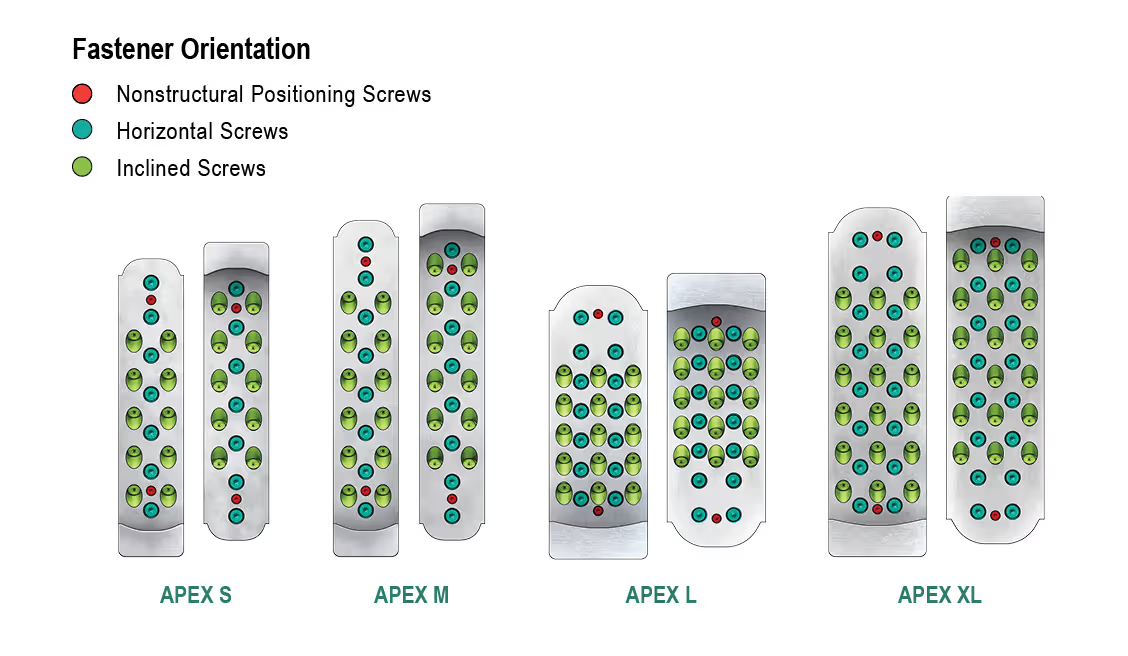
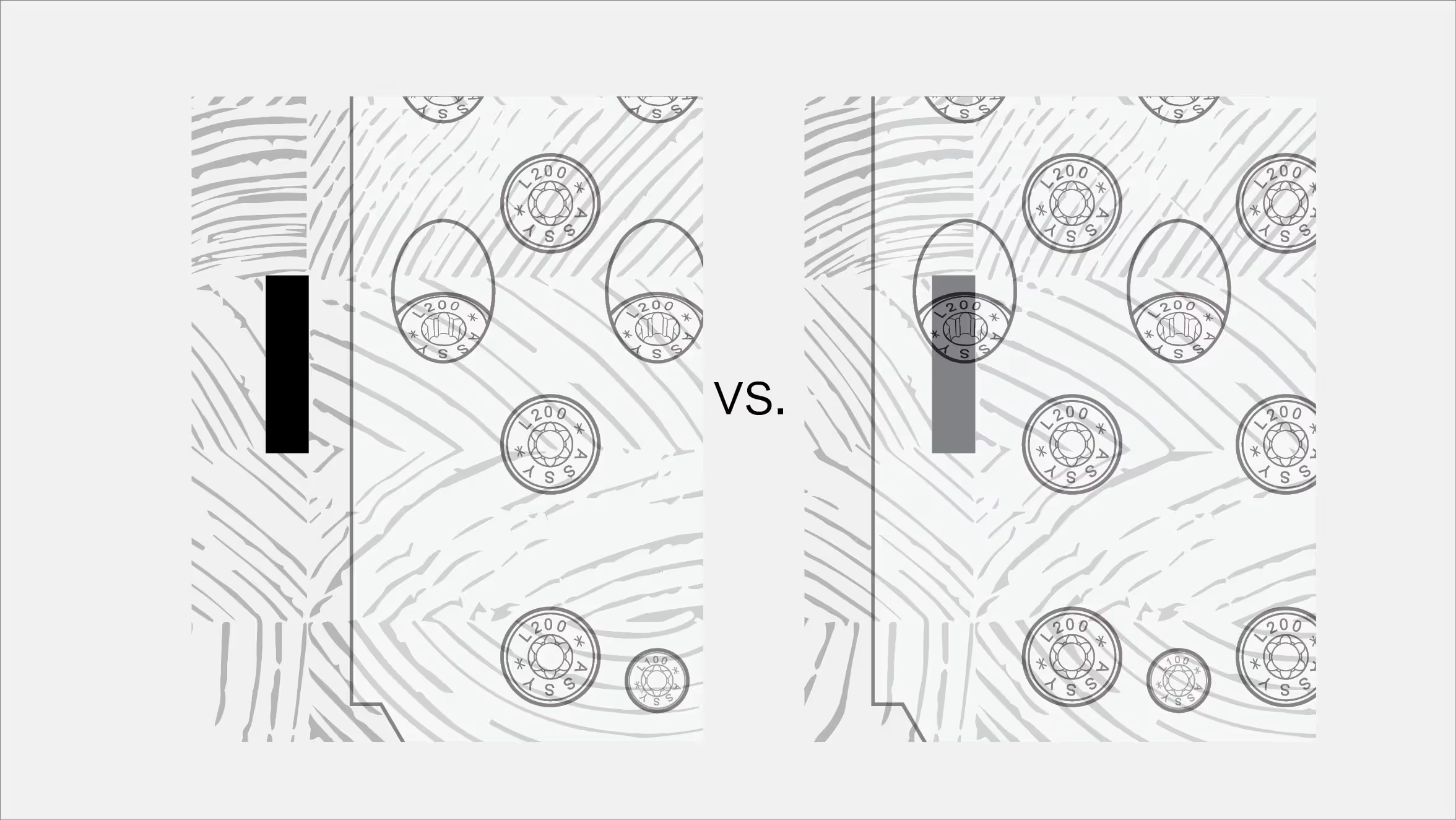
Positioning screws ensure accurate placement of the APEX connector. To improve accuracy and reduce time, it is recommended to predrill the nonstructural positioning screw locations during member fabrication. Install one nonstructural positioning screw into the hole highlighted at the top of the plate. Check to ensure alignment is maintained and then install the second nonstructural positioning screw into the hole highlighted at the bottom of the plate.

Pilot Holes - Recommendations

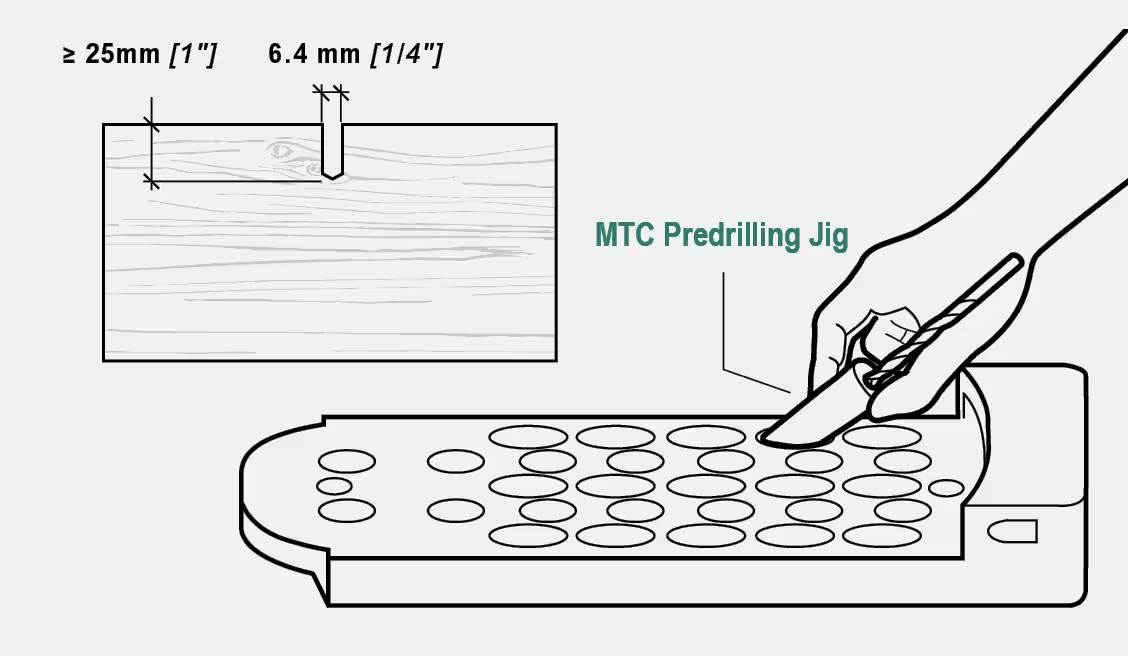
Pilot holes are optional; however, they facilitate screw thread engagement, help reduce splitting risks, ensure a proper penetration path which reduces screw wandering, and reduce insertion torque. For the structural fasteners used with the APEX series, pilot holes 6.4 mm [ 1/4 in. ] in diameter and 25 mm [ 1 in. ] in length are recommended. The use of MTC Predrilling Jig for the inclined screws of the APEX is recommended to ensure proper hole placement.

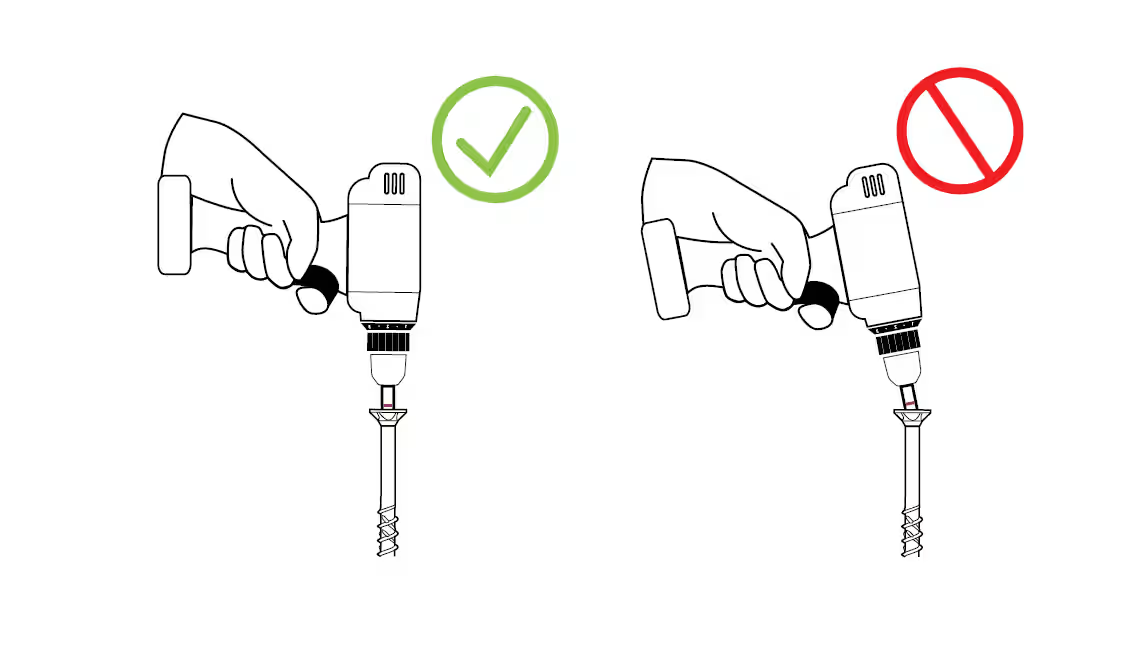
Screw Installation - Align Drill Bit Axis

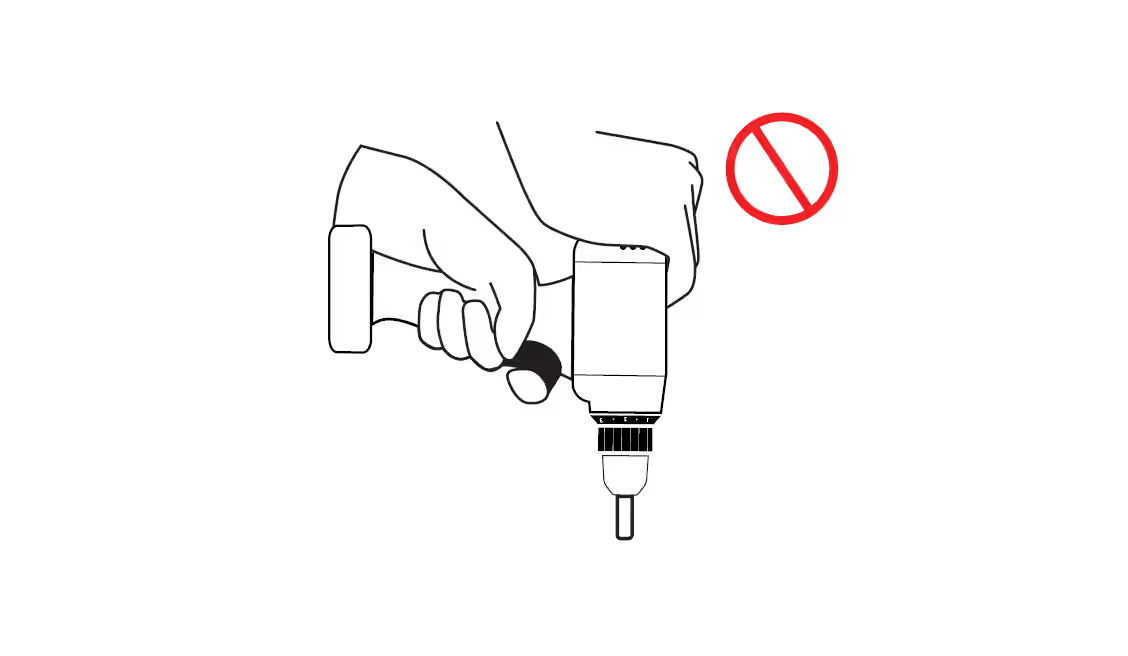
Align the driver bit axis parallel to the fastener axis during installation to allow proper torque transmission and to avoid stripping.

Screw Installation - Decrease RPM

To avoid overtorquing the screw, decrease the rotation speed about 12.7 mm [ 1/2 in. ] away from the final installed position. This is crucial to prevent wood crushing due to overtorquing, which can impact beam hanger tolerances, potentially impeding overall connection assembly. This is especially important when using an impact drill.

Screw Installation - Drill Pressure

Do not apply excessive pressure on the drill while driving the fastener to prevent fastener buckling or deviation during installation. Only apply the required force or use the recommended holder case to eliminate cam-out effects.

Screw Installation - One-Step Process

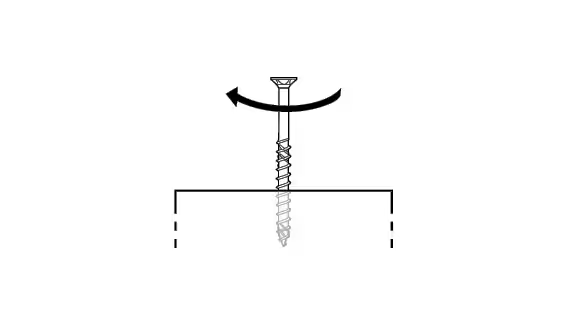
To avoid increased torque peaks caused by stopping and restarting the drive-in process, install the screw in one run until the head is lightly seated against the side member. If necessary, a torque wrench may be used to complete installation immediately after the screw has been driven.

Screw Installation - Structural Screws

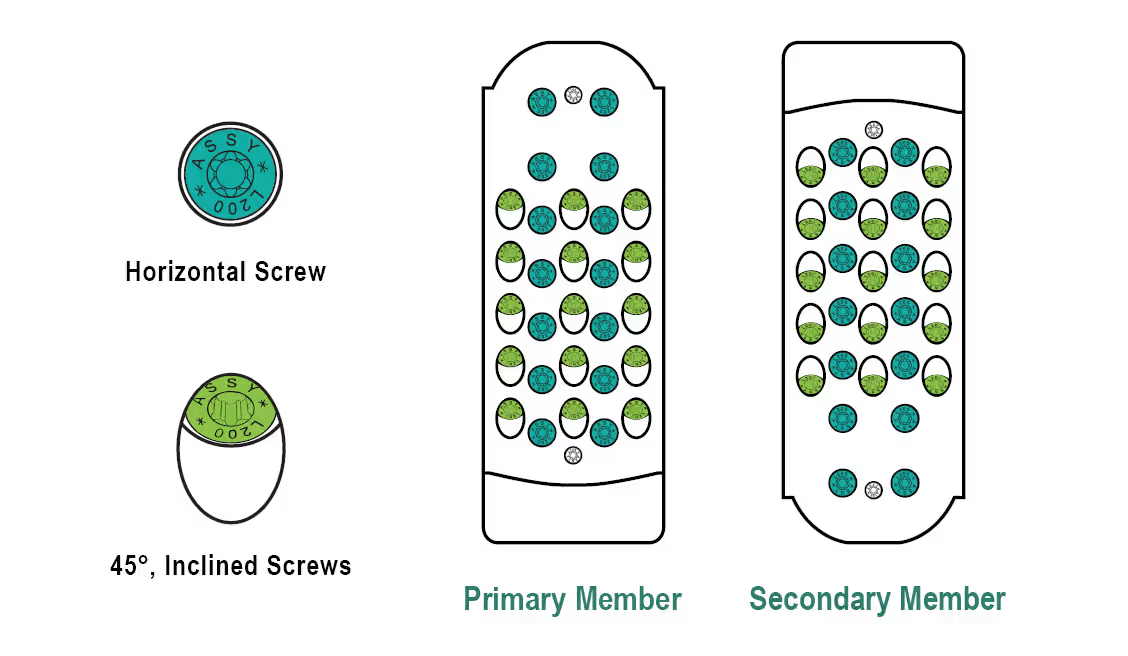
Install the 10 mm x 200 mm [ 3/8 x 7-7/8 in. ] MTC-FTC screws in all perpendicular holes first. Once all perpendicular screws are installed, install the 10 mm x 200 mm [ 3/8 x 7-7/8 in. ] MTC-FTC screws in all inclined holes.

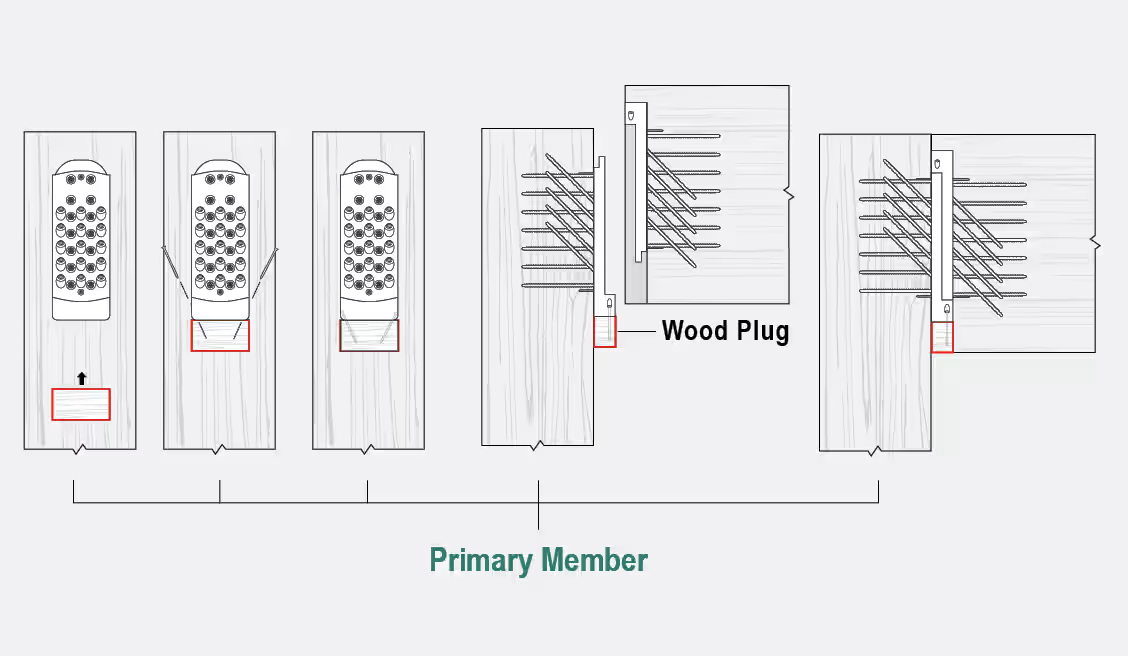
Optional Measures - Pre-Install Wood Plug

Where connectors are housed in the secondary beam, it is recommended to seal the void in the routing below the connector for aesthetics and fire protection. The APEX system is equipped with diagonal holes so that a wood plug may be pre-installed on the non-routed member in the shop or on site before the secondary beam is lifted into place.

Installation Instructions Overall

Refer to the General Notes to Installer in the Beam Hanger Design Guide for further information.

    Stay informed with MTC Newsletter

    Sign Up

    Register for a Technical Learning Session

    NEWS LETTER

    Sign up for MTC Newsletter and keep up to date with all our progress.